
Latest from RBIJ
News & Insights

Featured Story
RBIJ Launches First Policy Agenda
Featured Story
Fast Company: 250 years of business shaping justice
On America’s 250th anniversary, we know that business will continue shaping the next 250 years of American justice. But will it be on the right side of history when it does?
Start Exploring


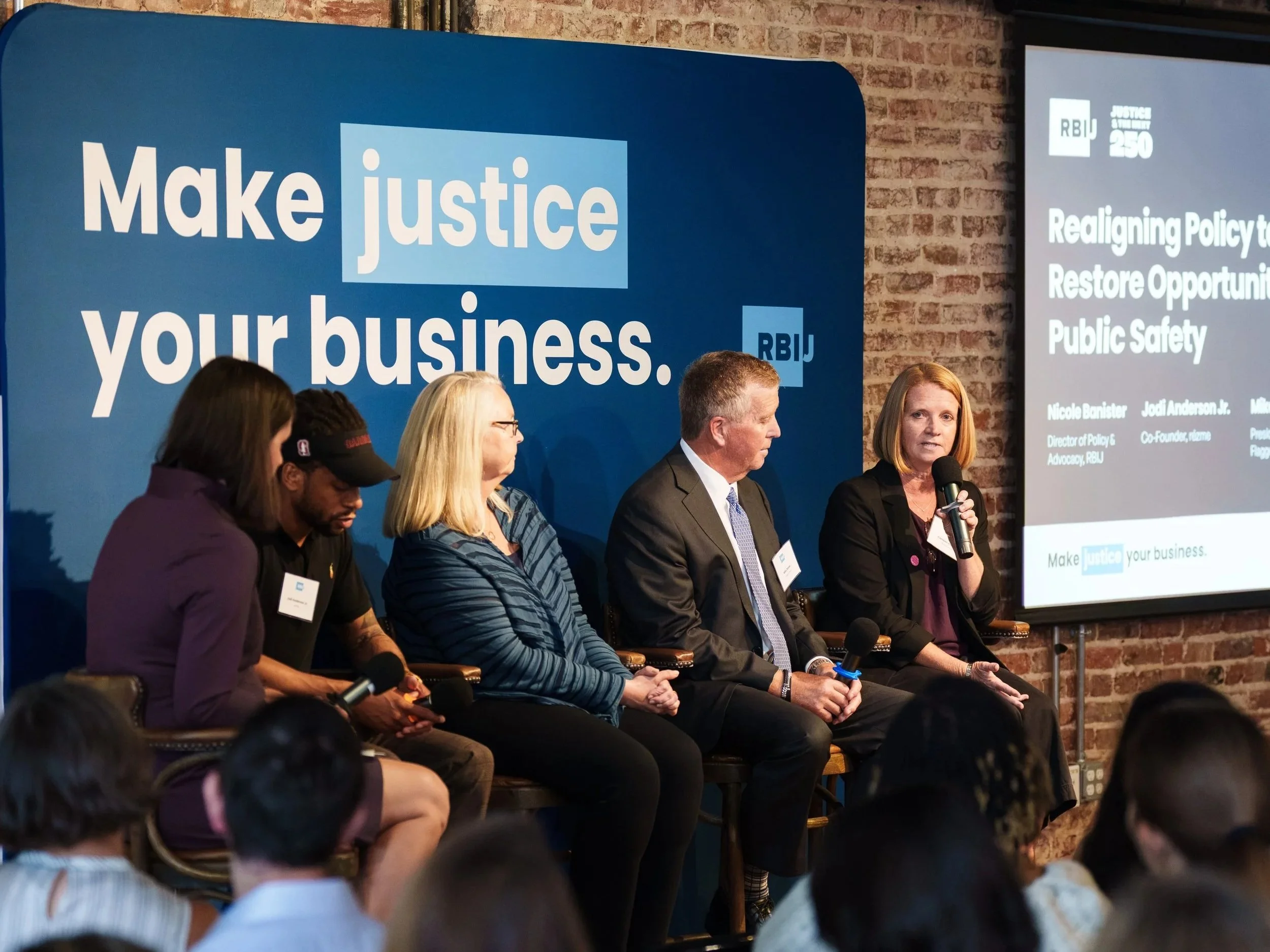
Business Leaders to Make the Case for Justice Reform at RBIJ Policy Agenda Launch in Washington, D.C.
The Responsible Business Initiative for Justice will host the event, with support from The Just Trust and Uber, to spotlight corporate leadership on criminal justice and workforce policy reform.



California’s ‘Fair Share’ proposal could lead to unfair hiring, advocates warn
The Sacramento Bee: Labor unions, health access and immigrant advocacy organizations celebrated when Gov. Gavin Newsom signed the Fair Share from Big Corporations Act into law last month. But some policy analysts worry the effort to make companies pay more toward their workers’ healthcare could unintentionally shift who and how they hire.

RBIJ Joins Amicus Brief: Supporting the Integrity of Record Sealing Laws and Fair Hiring Practices
RBIJ has joined Community Legal Services and The Clean Slate Initiative in filing an amicus brief in Doe v. InformData, LLC, currently before the Fourth Circuit.

After Five Years of Business-Backed Advocacy, Governor Kehoe Signs Clean Slate Reforms Into Law
Missouri Gov. Mike Kehoe signed SB 1421 into law, which included a bipartisan “Clean Slate” measure that establishes an automated process to identify and expunge eligible low-level drug offenses for thousands of Missourians.

The UK's New ETA Restrictions are Bad for Business
The UK's new ETA rules are blocking justice-impacted U.S. business leaders from entering the country. Hear from Alicia Rasta and Michelle Cirocco of Televerde, Chief Royal Ramey of The Forestry and Fire Recruitment Program, and Jesse Crosson of Night Is Day LLC on what that means for them — and why it needs reform.

Tough travel rules locking ex-offenders out of Britain also ‘lock out business’
The Observer: Critics say Home Office ban on visas for ex-offenders is short-sighted and bad for the economy.

For Three Years Businesses Backed Occupational Licensing Reform, Today Gov. Kemp Signed It Into Law
Georgia Governor Brian Kemp signed occupational licensing reforms (SB 207) into law — improving transparency around eligibility criteria, making licenses more accessible to the 4.5 million Georgians with a criminal record, and removing barriers to high-demand careers.

Missouri, don’t let criminal records keep good workers from open jobs
The Kansas City Star: SugarBot Sweet Shop supports Clean Slate bills now in Jefferson City. They help fill the workforce and reduce recidivism.

Brian Fabes and Maha Jweied: The Clean Slate Act is now Illinois law. Here’s why it matters to employers.
Chicago Tribune: The Corporate Coalition of Chicago and RBIJ share why employers don’t have to wait for Clean Slate implementation, they can start Fair Chance Hiring now.

Oklahoma Historic Fee Elimination Signed into Law
State of Oklahoma House of Representatives: Two measures reforming Oklahoma's fines and fees systems have been signed into law.

Alabama Bipartisan Bill Breaking Down Workforce Barriers Becomes Law
Gumptown Magazine: Governor Kay Ivey signed SB138 into law this week. Sponsored by Representative Parker Moore and Senator Rodger Smitherman, the bill breaks down workforce barriers for non-violent formerly incarcerated Alabamians.


Ash: Amid labor shortages, ‘Clean Slate’ is good for Mass. businesses, communities
Boston Business Journal: To strengthen our workforce and economy, it’s time for our state to embrace ‘Clean Slate’ legislation.

Opinion | Reforms to occupational licensing offer solutions to Alabama’s labor shortages
Alabama Political Reporter: Our business-friendly policies, competitive workforce training programs, and vital public-private partnerships continue to fuel our success.

Debt-related license suspensions put the brakes on employment
FedCommunities: Debt-related suspensions also keep people out of the workforce. Many jobs require a driver’s license. And driving may be the only way for some to get to work.